Research Directions
Direction 1 — Decoding How External Signals Program T Cell Fate
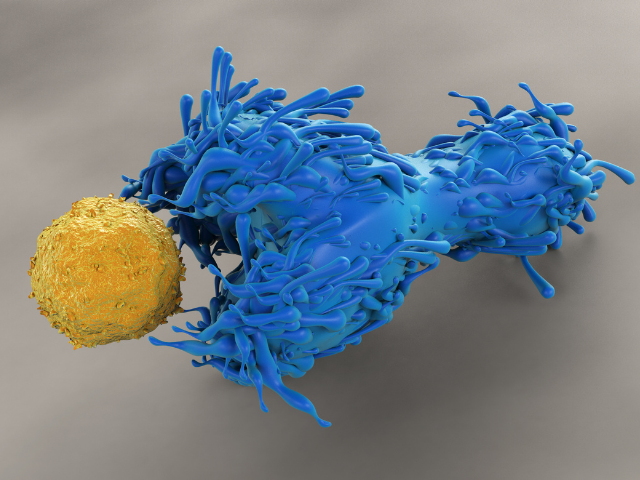
We investigate how precisely engineered biomaterials control T cell fate through external signaling. By tuning the chemical and physical properties of ligand presentation, including density, stoichiometry, rigidity, curvature, and detachability, we study how immune synapse organization, receptor clustering, trogocytosis, and downstream signaling regulate telomerase activity, cell cycle progression, metabolic rewiring, and long-term differentiation. Combining advanced imaging, single-cell multi-omics, and computational analysis, we aim to define how early extracellular cues are converted into durable transcriptional and epigenetic programs governing persistence, exhaustion, and functional longevity.
Direction 2 — Biomaterial Programming of Durable Therapeutic T Cells
We develop biomaterial-guided strategies to engineer therapeutic T cells with enhanced persistence and functional durability. Using programmable ligand-presenting biomaterials, we seek to externally control T cell activation and differentiation to generate long-lived and highly functional cell states during ex vivo manufacturing and after infusion. Our work integrates biomaterials, synthetic biology, and immune engineering to establish scalable and controllable approaches for improving next-generation cell therapies.
Direction 3 — Engineering Immune Microenvironments With Functional Biomaterials
We design functional biomaterials to locally reprogram immune microenvironments and overcome suppressive tissue barriers. Our approaches focus on controlling innate and adaptive immune interactions through spatially and temporally regulated presentation of immune-modulatory signals. By engineering localized immune activation and communication, we aim to enhance immune-cell infiltration, antigen presentation, and coordinated tissue-level immune responses while minimizing systemic toxicity. These studies establish biomaterials as programmable immune niches for directing immunity in cancer and inflammatory diseases.
Collaborations:
Joseph Fraietta Laboratory at Penn (https://hosting.med.upenn.edu/fraietta-lab/)
Ania-Ariadna Baetica Laboratory at Drexel (https://drexel.edu/engineering/about/faculty-staff/B/baetica-ania/)
Vijay Bhoj Laboratory at Penn (https://pathology.med.upenn.edu/department/people/271/vijay-bhoj)
Felix Kim Laboratory at Thomas Jefferson University (https://research.jefferson.edu/labs/researcher/kim-research.html)
Gabriele Romano Laboratory at Drexel College of Medicine (https://drexel.edu/medicine/about/departments/pharmacology-physiology/research/romano-lab/)